
Fear vs Faith: Your Spiritual Awakening Reveals This Truth

Fear vs Faith: Your Spiritual Awakening Reveals This Truth

Constantly worried that newfound clarity will leave you feeling adrift and afraid of what you don't understand about yourself—that’s the reality facing so many right now. The tension between fear vs faith after awakening feels less like a choice and more like an inescapable gravitational pull, pulling you toward the unknown depths of your own psyche. Every breakthrough in spiritual growth seems immediately followed by a deeper question mark hanging over everything solid. It's exhausting managing this volatile mix, where every moment of inner peace is shadowed by the sudden weight of what remains unintegrated. This deep dive into shadow work reveals that while faith promises certainty, it’s the persistent wrestling with fear—the very act of confronting its patterns—that forces the necessary emotional intelligence required for real self-acceptance.
Your pattern of reacting to fear rather than relying on belief is not a deficiency in your core programming; it’s simply how your spiritual awakening has rerouted your energetic circuitry. Within the context of spiritual awakening, this wiring manifests as a natural inclination toward direct confrontation over passive acceptance. Instead of viewing your anxiety as proof of failing faith, recognize that this pattern points to a powerful mechanism for self-acceptance. You are wired for experiential truth, which means true inner peace arrives not when you find a comforting narrative, but when you navigate the raw data of your own shadow work. Understanding how enlightenment alters fear response allows you to shift from merely managing anxiety during spiritual growth to mastering the very architecture of your emotional shifts post-awakening. This direct engagement is your unique pathway toward profound personal transformation.
The conventional narrative suggests that a spiritual awakening means an immediate, total replacement of fear with unwavering faith. Most people believe this is a simple switch, ignoring the messy reality of deep personal transformation. They see it as a binary choice, missing the crucial nuance in navigating anxiety during spiritual growth. However, what astrology reveals is far more complex. The framework shows that true understanding of fear vs faith after awakening isn't about eliminating one for the other; it's about integrating them. Instead of fearing the unknown or clinging solely to dogma, genuine self-acceptance allows you to meet both with curiosity. This perspective on emotional shifts post-awakening illuminates how mindfulness practices can guide this process, proving that deep spiritual growth involves skillful fear management rather than perfect faith maintenance.
Ignoring this shift means accepting that your understanding of self remains tethered to what you were taught to believe, leaving you perpetually reliant on external structures for comfort. You might find yourself constantly backtracking toward familiar narratives just because they feel solid enough to lean against. Honouring the awareness, however, means recognizing that the ground beneath your feet is more stable than any belief system could ever promise. It means confronting those areas of self that remain undefined, not as voids to be filled by comforting dogma, but as raw material for genuine experience. The cost of inaction is intellectual stagnation; the reward for engagement is a durable sense of self-possession, one that carries you forward regardless of what clarity reveals next.
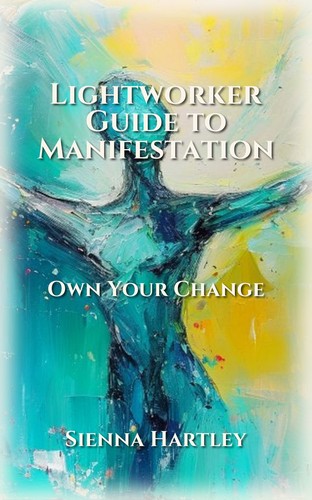
Book cover: You feel the shift already. You are a cosmic architect of your own unfolding. See ease in every breath you take now. Try this today.
What you might be realizing, right now, is that true spiritual awakening doesn't diminish your capacity for belief; rather, it radically changes what you perceive as risk. You begin to see fear not as a warning sign pointing toward danger outside of you, but as an outdated narrative pattern running in the background of your own attention. This shift means that instead of needing more doctrine or stronger rituals to keep yourself safe, you start noticing the architecture of the stories you tell yourselves when nothing is going wrong. But this is just one piece of the puzzle. You are also encountering patterns like The Echo Chamber Effect on Intimacy and The Illusion of Linear Progress, and perhaps a phenomenon we’re calling Emotional Inertia in Sacred Spaces. These insights suggest a whole different way of mapping your internal landscape, one that requires more than just reading about it.
Right now, you have insight, but what you are missing is the internal architecture that allows pure awareness to stand alone against terror. You sense a shift in power—the realization that your deepest anxieties don't require a protective narrative to recede. Imagine possessing a framework where confronting the shadow isn't about finding a bigger belief to prop yourself up, but about simply seeing it clearly enough for it to lose its hold on you. This understanding means experiencing moments of profound stillness when everything around you feels unstable. You are standing at the edge of knowing that true resilience comes from direct perception, not comforting doctrine. Having this full picture gives you an unshakeable ground beneath your feet, regardless of what fear whispers next.
To deepen your understanding of how awakening shifts your relationship with fear and belief, explore the comprehensive guides at transformation.press now.

Frequently Asked Questions

What is the core difference between how awakening affects fear versus faith?

Awakening tends to dismantle the *source* of fear by revealing its illusory nature, whereas it often challenges the *structure* or dogma within one's existing faith.

Does this mean I should stop believing in my current faith practices?

Not necessarily; awakening usually involves deepening your understanding so that you can integrate spiritual teachings into a more authentic, lived experience rather than adhering rigidly to rules.

How does realizing fear as an illusion actually feel day-to-day?

It feels less emotionally charged; instead of being paralyzed by the *thought* of danger, you observe the thought without attaching your entire sense of self to it.

Is confronting my fears part of the awakening process, or is it something I should do on my own?

While personal practice is key, approaching fear through awareness gained in awakening provides a framework for observing and gently dissolving those patterns without self-judgment.

If faith is challenged, what replaces that sense of security?

The replacement security comes from an internal realization—a direct knowing of your inherent nature—which is less dependent on external doctrines or belief systems.