High Standards? Why You're Burning Out Now

High Standards? Why You're Burning Out Now


Feeling like your own impossibly high standards are what's secretly draining you until you can barely function. That relentless internal critique, the constant drive for perfectionism, leaves little room for anything resembling simple downtime. High achievers often mistake exhaustion for accomplishment, viewing any pause as a failure to meet an invisible metric of 'enough.' The struggle isn't about managing your schedule; it’s about wrestling with the internalized belief that resting means falling behind. Finding practical burnout recovery tips feels like admitting defeat when you are so used to operating at peak capacity. This ingrained habit of overcommitting, fueled by relentless self-criticism, is exhausting. Learning genuine rest and recovery requires fundamentally shifting how you view setting boundaries, moving away from the unsustainable narrative that productivity equals worth.
That intense internal drive you feel, the one that pushes you to always be better, isn't a flaw in your wiring; it’s a fundamental feature of your Mercurial energy within the sphere of self-development. You aren’t wired for mediocrity; you are wired for excellence, which explains why high achievers and burnout often intersect so closely. Viewing this pattern through the lens of perfectionism and burnout risk reveals that what feels like relentless self-criticism is actually an over-application of a powerful system meant to create structure. The key isn't suppressing those standards; it’s learning how to set boundaries for perfectionists. Understanding your inherent drive allows you to shift from exhausting overcommitting to practicing true self-compassion for high standards, transforming that intense inner critic into sustainable motivation.
The mainstream narrative treats burnout as a simple matter of workload management, suggesting more vacation time or better time organization are sufficient fixes. They miss the core mechanism at play: an internal pressure cooker fueled by perfectionism and unexamined expectations. The conventional view fails to grasp that for high achievers, this isn't just stress; it’s a systemic inability to accept imperfection. Astrology reveals that those with elevated standards often mistake self-criticism for rigor. The sphere framework illuminates why burnout recovery tips focusing solely on external fixes miss the internal architecture of overcommitting. It shows that true understanding requires acknowledging the pattern where high expectations fuel exhaustion. This perspective validates the deep struggle, pinpointing the need not just for rest and recovery, but for learning to set boundaries while cultivating self-compassion.
If you treat your high standards as an unrelenting internal mandate, the cost is slow depletion. You find yourself perpetually running on reserves that never quite refill, leading to professional stagnation not because of external pressure, but because the engine itself has worn thin. The resulting pattern is a cycle where achievement feels less like reward and more like temporary reprieve before the next required peak. Conversely, if you begin to treat those standards as directional fuel rather than absolute performance benchmarks, something different becomes possible. You learn to differentiate between necessary excellence and debilitating perfectionism. This shift allows your drive for quality to remain potent while giving your energy system the necessary bandwidth to sustain itself over years, not just until the next deadline passes.
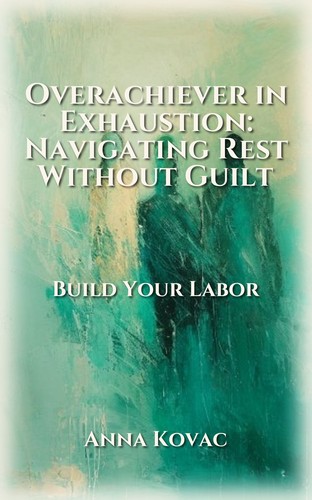
Book cover: Are you always giving too much? You equate depletion with devotion. Your collapse shows where the pressure truly lay. If not now, when?
You might think your relentless pursuit of excellence is admirable, but here’s a truth you need to see clearly: setting impossibly high internal standards doesn't actually motivate; it just guarantees exhaustion by creating an unsolvable gap between where you are and where you believe you must be. That persistent feeling of almost-there is the engine that burns you out. If you want to understand the deeper mechanics at play, keep your eyes peeled for patterns like The Perfectionism Plateau, The Comparison Echo Chamber, and The Invisible Completion Tax. These aren't just random observations; they are specific signatures we see repeatedly when high standards become self-sabotaging forces. For now, just recognize that gap. We’ll talk about what to do with it in the next stage.
Right now, you understand that your high standards are part of who you are, but you haven't seen the precise architecture for channeling them into sustainable motivation. You feel the distance between operating from a place of exhausting perfectionism and achieving genuine recovery while still maintaining your commitment to excellence. What you lack is the framework that shows how those rigorous internal benchmarks can become reliable fuel rather than an engine for burnout. Imagine having the full picture: knowing exactly where your drive meets your capacity, and seeing a clear path forward where high achievement and deep rest are not opposing forces but complementary parts of one sustainable system. That clarity—that blueprint for enduring excellence—is what you are ready to grasp.
Your commitment to excellence deserves a plan built for longevity. Start building your sustainable path toward recovery and managing those high standards by visiting the complete guide at transformation.press.

Frequently Asked Questions

Why do people with high standards tend to experience burnout more often?

High standards often lead to perfectionism and overcommitting, which can result in chronic stress and exhaustion.

Is having high standards inherently bad for mental health?

Not necessarily; the issue arises when those standards become rigid, unattainable, or cause constant self-criticism.

What is the difference between healthy ambition and burnout from high standards?

Healthy ambition involves balance and self-compassion, whereas burnout occurs when striving for perfection leads to neglecting basic needs.

How can I start lowering my standards without feeling like I'm failing?

Start by setting one small, achievable goal each day that is intentionally 'good enough' rather than perfect.

What are some practical strategies to manage perfectionism and prevent burnout?

Practice self-compassion, learn to accept imperfection, and actively schedule downtime without guilt.