
Burnout Recovery: Don't Rush Back, Or You Will Fail Again

Burnout Recovery: Don't Rush Back, Or You Will Fail Again

The persistent feeling that just sitting back down at your desk will magically resolve this deep exhaustion—that's the trap you keep falling into. You anticipate a quick fix for burnout recovery after work, believing reentry is linear, when in reality, every rushed step threatens to derail any progress made. It feels like you’re failing at the simple act of returning to normal life. The pressure to prove functionality, to immediately resume peak performance, often overrides listening to what your body actually needs right now. You are constantly calculating how much more effort you can safely absorb, trying to map out a sustainable burnout recovery timeline without triggering that familiar wave of overwhelm. Understanding the necessity of truly pacing yourself at work is proving harder than the actual tasks themselves.
Your tendency to feel compelled to rush back, believing that productivity equals recovery, is not a failure of willpower; it’s a deeply ingrained pattern of self-worth rooted in achievement. Within the sphere of understanding human energy cycles, what you mistake for relentless drive is actually a learned response tied to external validation, a core wiring we can recognize. You are exhibiting the archetype of the Overachiever Wiring, which thrives on immediate output rather than sustainable restoration. Understanding this pattern allows us to shift your internal narrative from one of deficiency to one of structural resilience. Instead of viewing slow movement as regression, view it as necessary calibration for effective reintegrating into work life. We need to architect a gradual return to work plan from burnout that honors the deep depletion you experienced, focusing on pacing yourself at work rather than simply matching pre-illness output levels.
The conventional understanding suggests a linear path: take time off, rest completely, and then jump right back in. This common misreading of burnout recovery after work treats exhaustion like a simple battery that just needs recharging. Instead, the sphere framework illuminates something far more nuanced. It shows that rushing back ignores the complex process of re-integrating into work life. Most people are told to simply manage their time better or adopt some quick work-life balance strategies. However, this misses the essential need for a thoughtful burnout recovery timeline. The structure understands that pacing yourself at work requires deliberate scaffolding, not just willpower. Recognizing the subtle signs of burnout recurrence means understanding the depth of depletion. This lens provides clarity where generalized advice fails, finally validating the reality that returning to work after burnout demands a gentle, measured pace.
If you treat this fatigue as a simple hurdle to jump over, expecting your old routine to magically restore your reserves, you risk nothing more than repeating the cycle. You might find yourself sinking back into that familiar dip by month three, not because of external demands, but because the foundational weariness was never addressed. The professional momentum you seek becomes another source of depletion, forcing a repeat bout of exhaustion. However, if you honor the pacing required for genuine recovery—if you build in those measured milestones—you start building resilience instead of just resuming activity. You begin to see your capacity increase slowly, methodically, allowing sustained focus on complex tasks without the accompanying sense of dread. This approach means that when you reach full capacity, it is built upon a stable foundation, not borrowed energy.
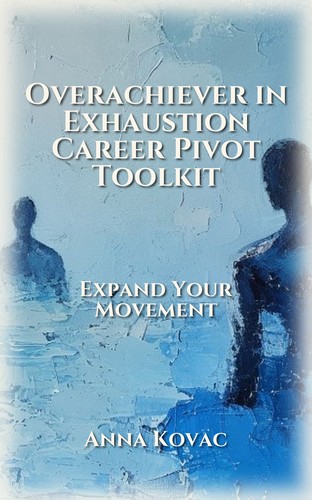
Book cover: Still chasing that alpha glow? You equate motion with merit. Your exhaustion signals a different metric for success. If not now, when?
You might think returning to your old pace is a sign of strength, but here’s what you need to know: simply being back in the chair doesn't mean the healing has started; it often just means the exhaustion has been temporarily misplaced into sheer activity. Your body mistakes motion for progress, which keeps the underlying system stress signals active and effectively resets your burnout clock. If you keep pushing through these subtle signs—the sudden need to prove yourself, the inability to sit still during low-stakes meetings—you are actually reinforcing the pattern that broke you in the first place. There are deeper patterns at play here if this feels familiar: The Illusion of Linear Recovery, The Myth of the Return-to-Normal Timeline, and Recognizing Latent Capacity Burnout Triggers. This diagnosis is just mapping the terrain; understanding how to actually navigate it requires a different map entirely.
You currently have a general feeling of wanting to get back to your normal routine, but what you are missing is the precise roadmap for reentry. You do not yet possess the calibrated understanding of pacing that separates sustainable reintegration from simply repeating the cycle that caused the exhaustion in the first place. Imagine knowing exactly which work capacities you can safely resume on week one, and how those benchmarks must incrementally shift over the next month to build true resilience. This detailed blueprint reveals the difference between merely showing up and actually rebuilding your internal reserves. Grasping this specific sequencing provides the full picture of what a restorative return really looks like, allowing you to approach your career from a position of genuine strength rather than fragile hope.
Explore the complete guide to building a sustainable path back to work and find your next steps at transformation.press

Frequently Asked Questions

What are the signs that I am trying to return to work too quickly?

Signs include increased anxiety before work, difficulty focusing on tasks, or feeling overwhelmed by your usual workload. These suggest your nervous system hasn't fully recovered yet.

How long should my recovery period realistically take after burnout?

There is no set timeline; it varies greatly based on the severity of the burnout. Focus instead on listening to your body’s signals rather than adhering to a strict calendar date.

What are some gentle ways I can ease back into my routine without overdoing it?

Consider gradually increasing hours or tasks, perhaps starting with partial days or highly structured, low-stakes activities. This 'scaffolding' approach builds capacity safely.

If I feel overwhelmed at work again, what is the first thing I should do?

The immediate step is to pause and practice grounding techniques, like deep breathing or a short walk. This helps regulate your nervous system before addressing the task itself.

Should I talk to my employer about adjusting my workload temporarily?

Yes, communicating proactively with HR or a manager is crucial. Frame it as a temporary accommodation for optimal performance, rather than admitting failure.