Rebuilding Trust After Burnout: Your Guide, Survivor

Rebuilding Trust After Burnout: Your Guide, Survivor

Feeling like every decision requires a second opinion because the core mechanism for your own judgment feels shot? That’s where you are right now. The exhaustion from burnout recovery leaves an echo chamber in your head where doubt plays constant background noise, making any snap judgment feel catastrophic. You scrutinize every small victory and every minor setback, wondering when reliable self-trust will return. The old wiring—the one that let perfectionism run the show—has frayed, leaving you unsure how to set boundaries or even manage basic emotional regulation without a crash landing. Building back burnout recovery self-trust isn't about remembering what you used to know; it’s learning a new vocabulary for yourself, one built on recognizing your own worth beyond sheer output.
That pattern of hesitation you recognize in yourself isn't evidence of inherent fault; it is simply your system adjusting its internal architecture. Think of it this way: what you experienced wasn't a flaw in character, but an overtaxing of your emotional regulation circuits. Within the framework of burnout recovery, we see this specific wiring pattern manifesting as chronic self-doubt after chronic stress. Your mind defaulted to hypervigilance, and that protective mechanism now reads as inability. We aren't aiming for perfectionism; we are building resilience. Understanding this structural shift allows you to stop viewing your caution as a personal failing and start treating it as necessary recalibration. Accepting the pattern as wired wiring is the first step toward restoring personal boundaries post-burnout, allowing genuine self-trust to take root again.
The conventional wisdom suggests that simply resting will restore your sense of self-worth after exhaustion, ignoring the deeper structural issues at play. Most people interpret burnout recovery as a linear return to baseline function, treating it like a simple depletion problem rather than a pattern disruption. The sphere framework illuminates why this common advice fails when addressing rebuilding self-trust after burnout. It shows that the struggle is not merely fatigue; it's a crisis of internal authority. You are realizing that old coping mechanisms fueled by perfectionism were unsustainable. Understanding emotional regulation isn't about willpower, but recognizing where you need to establish firm boundaries. This perspective validates the deep work required for self-compassion, finally explaining why surface-level rest isn't enough when healing self-worth after exhaustion is at stake.
If you continue to treat your own judgment as something unreliable, you risk defaulting to patterns that kept you going when you were depleted. This might mean consistently over-relying on others for confirmation or second-guessing every minor decision until action feels impossible. The consequence is a persistent hesitation in professional settings, where vital moments pass because the internal signal—the gut knowing what to do next—has been muted by exhaustion. Conversely, honoring the process of rebuilding trust means accepting that your judgment is not infallible right now; it is merely recovering. This allows you to test small decisions with yourself again, building a quiet, reliable evidence base for your own instincts. You start making choices based on what feels sustainable, rather than what feels immediately necessary.
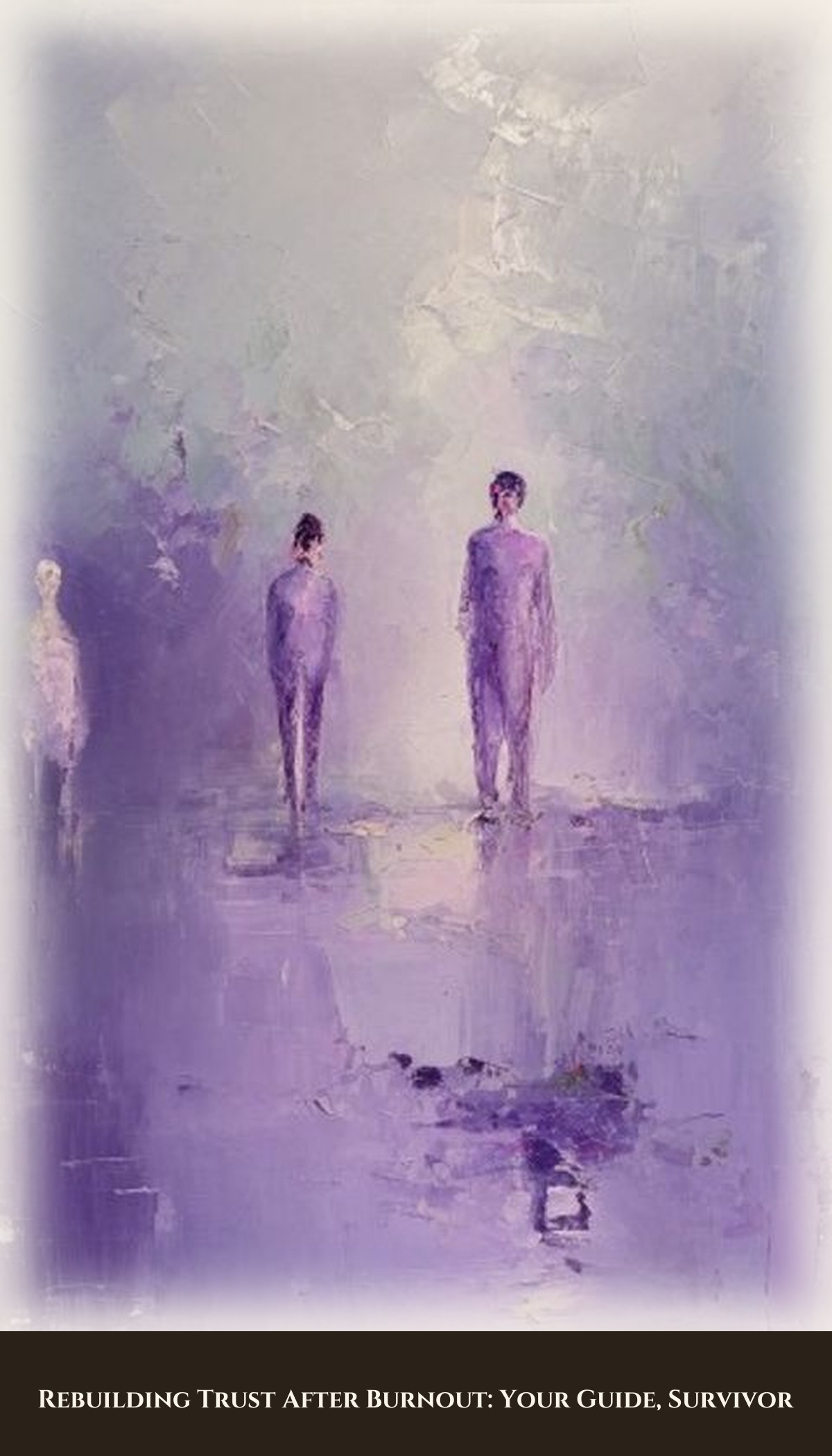
Book cover: You keep emptying yourself. You are more than your achievements. Your need to disappear proves you gave too much. Rebuild.
You realize that your inability to trust your gut feeling isn't a personality flaw, but a direct, predictable byproduct of prolonged emotional depletion. When you are running on fumes, your brain prioritizes survival signals over nuanced self-assessment, making every internal 'knowing' feel suspect until it can be externally validated by another person’s agreement. It rewires your internal compass to point toward external confirmation. But this struggle is just the tip of the iceberg when it comes to rebuilding that inner authority. Keep an eye out for The Echo Chamber Effect, recognizing Pattern Recognition Fatigue, and understanding Temporal Self-Betrayal. These concepts reveal deeper layers to what you’re experiencing, but they require a different kind of attention than what I can give away just yet.
Right now, you feel a persistent hesitation before every choice, a subtle internal veto whispering doubts about your own judgment. You know intellectually that making decisions is necessary for moving forward, but the gap remains between knowing what to do and believing you are capable of doing it right this time. Imagine having the steady assurance that whispers of second-guessing finally fall silent, allowing you to trust the compass pointing inward. Picture yourself navigating complex situations with a clear sense of self-reliance, where your intuition is a reliable guide rather than a source of anxious speculation. This feeling—the quiet confidence in your own discernment—is what’s just out of reach, visible but not yet fully integrated into your daily decisions. Seeing the full picture of how capable you truly are awaits your attention.
See how to rebuild that self-trust immediately by exploring the complete guide at transformation.press

Frequently Asked Questions

Why does burnout make it hard to trust my own judgment?

Burnout depletes your cognitive resources, leading you to doubt your instincts and decision-making abilities. This can create a persistent feeling of 'imposter syndrome' regarding your competence.

Is struggling with self-trust normal after burnout?

Yes, it is very common. Chronic stress and exhaustion erode the sense of self-efficacy—the belief in your ability to handle life's challenges successfully.

How can I start rebuilding my trust in myself practically?

Start with small, achievable goals that you know you can meet. Successfully completing these micro-tasks builds a tangible record of reliability for your brain to recognize.

Does therapy help rebuild self-trust after burnout?

Therapy provides a safe space to process the trauma of overwork and challenge negative core beliefs about yourself. It helps you reconnect with your authentic needs versus external demands.

What are signs that I am still struggling with self-trust post-burnout?

Look out for excessive people-pleasing, chronic procrastination due to fear of failure, or constantly second-guessing decisions you've already made.