Chinese Zodiac Shadow Work: Why It Hits Harder Than Identity Shifts

Chinese Zodiac Shadow Work: Why It Hits Harder Than Identity Shifts

Feeling like you’re constantly misinterpreting your own emotional patterns because of how deeply ingrained your zodiac sign feels to your core identity—that hits different. The weight of your Chinese zodiac shadow work isn't just another layer of self-reflection; it feels foundational, woven into the very fabric of who you believe yourself to be. Every perceived flaw, every pattern repeat, seems directly traceable back to that primal code. This makes general Identity exploration feel inadequate when dealing with the specific narratives provided by your Zodiac personality traits. You are acutely aware of how much your Chinese Zodiac compatibility supposedly dictates your emotional landscape, making the separation between self-understanding and cosmic blueprint painfully narrow. It’s a deep dive where every breakthrough feels less like an option and more like an unavoidable reckoning with your Astrological shadows.
You are not inherently flawed because deep emotional excavation feels uniquely difficult for you; that pattern is simply your structural wiring as defined by your Chinese Zodiac shadow type. Stop viewing these patterns as inherent weakness and start seeing them as specialized operating systems. When comparing zodiac shadow work challenges to identity work, you realize the resistance isn't about who you are, but how this particular energetic signature processes deep excavation. Your specific hurdle lies in navigating the ingrained protective mechanisms associated with your sign’s elemental balance. Understanding this framework—that this difficulty is a predictable aspect of your inherent makeup—allows you to shift from shame to strategic pride. This recognition transforms potential stumbling blocks into precise areas for focused self-discovery, making your zodiac signs and inner shadow exploration both targeted and manageable.
The conventional understanding suggests that all deep introspection is fundamentally the same process. They look at Chinese Zodiac compatibility charts and treat it like mere personality profiling. What they miss entirely is the inherent difficulty of true chinese zodiac shadow work when compared to simple identity exploration. The mainstream narrative fails to grasp why certain signs face deeper hurdles in self-discovery journey. Astrology reveals that for some archetypes, the shadows are woven too tightly into the very fabric of their core Zodiac personality traits. The sphere framework acts as the necessary lens, showing how the lunar cycle influence complicates this process far beyond what general zodiac signs and inner shadow exploration can account for. You finally understand that comparing zodiac shadow and identity work is an apples-to-oranges comparison; it requires acknowledging the unique psychological architecture embedded within each sign's passage through the chinese zodiac shadow type.
If you treat your shadow work as just another set of behavioral traits to analyze, you risk reducing complex internal conflict to a predictable pattern. You might end up merely confirming what you already believe about yourself, mistaking cultural narrative for genuine self-understanding. This keeps you perpetually managing the zodiac blueprint rather than authoring your own emotional landscape. Conversely, by accepting that your sign informs but does not dictate your deepest vulnerabilities, you gain clarity over where the system is forcing you to misinterpret signals. You develop a detached observer's view of your emotions, allowing you to see the subtle dissonance between what feels "natural" and what serves your actual growth. This allows for targeted self-correction rather than habitual reaction.
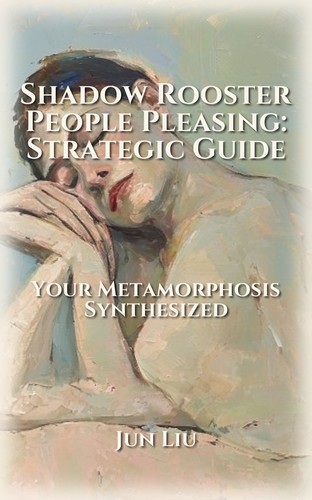
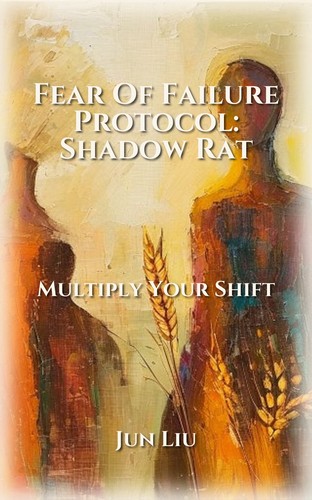
Book cover: It’s just a survival script. You are quick intelligence; your caution was once brilliant. See what truly frightens you now. Own your instinct.
You’re noticing that digging into your zodiac shadows feels heavier than simply defining who you are. That’s because identity work is about drawing a neat line around what you think you are; it requires definition. Shadow work, however, demands you confront everything you refuse to define—the parts of yourself that feel too messy or inconvenient for the narrative you want to present. Specifically, when your innate cultural coding clashes with your internal contradictions, the excavation gets sticky. Understanding this tension is key: the more archetypal weight carried by your sign, the deeper the resistance becomes. Keep an eye out for patterns like The Ox’s Burden of Perfection, The Monkey’s Fear of Stagnation, and The Dog’s Unspoken Loyalty Contract. We only scratch the surface here, but that initial friction you feel? That is exactly where the real material lives.
You feel the pull toward a deeper self-knowledge, one that accounts for the specific contours of your inherent nature. Right now, you see general advice for emotional excavation, but what you are missing is the precise framework detailing why your particular zodiac shadow type introduces unique resistance into deep work. You sense there’s a specialized vocabulary to describe those moments when standard self-help feels like it misses the mark entirely, leaving you feeling only partially seen. Imagine having that complete guide in hand—a map specifically drawn for the topography of your chart—allowing you to pinpoint exactly where your natural inclinations create friction during emotional excavation. Knowing this specific pattern is what separates guessing from genuine mastery over these complex dynamics.
Deepen your understanding of these complex dynamics by exploring the complete guide at transformation.press.

Frequently Asked Questions

What exactly does 'shadow work' mean in this context?

Shadow work involves confronting and integrating repressed or unconscious parts of yourself, which can be emotionally challenging.

Why might the Chinese Zodiac make shadow work feel more difficult?

The strong cultural emphasis on fixed roles and external identity within zodiac archetypes can create resistance to exploring internal conflict.

Is it that the Zodiac personality traits are too rigid for deep self-exploration?

Some feel that adhering too closely to a defined zodiac type limits the perceived space for messy, undefined emotional growth.

How is 'identity work' different from shadow work in this framework?

Identity work often focuses on understanding and accepting established roles or external labels, whereas shadow work digs into what you deny about yourself.

What can I do to make shadow work easier if I feel tied to my Zodiac sign?

Try viewing your zodiac traits as guidelines rather than unbreakable laws, allowing room for contradiction and change in your self-perception.