Stop Blaming Fatigue: You're Missing Your Boundaries

Stop Blaming Fatigue: You're Missing Your Boundaries
Constantly telling yourself you’re just tired when what you really need to learn is how to say no without feeling that familiar, crushing wave of guilt—that pattern is exhausting. The deep dive into the chronic fatigue cause often leads straight back to an unacknowledged gap in your personal limits. Recognizing this connection means seeing that constant exhaustion isn't just a physical symptom; it’s a behavioral echo of overcommitment. You are brilliant at managing everyone else's needs, adept at navigating every social expectation until the reserves run dry. This deep-seated habit of people-pleasing has blurred where your emotional boundaries actually exist. Learning boundary setting techniques isn't about being difficult; it’s about recognizing that genuine self-care practices start with respecting what you say "no" to today, which is fundamentally crucial for psychological well-being and preventing burnout.
Stop viewing your need for firm personal limits as a deficit or a failure of willpower; it is simply the architecture of your emotional boundaries in action. Within the sphere of human psychology and relational dynamics, what you experience isn't weakness—it’s the inherent wiring of an archetype wired for deep connection that has been chronically over-giving. Your pattern suggests an advanced capacity for empathy, but when coupled with a lack of established personal limits, it leads directly to burnout prevention failure. Understanding your specific need for clear demarcation points is not about policing others; it's recognizing the structural reality that managing energy depletion through boundaries requires honoring these internal parameters. Viewing this framework allows you to see how boundary issues causing chronic fatigue symptoms are signals, not symptoms themselves.
The conventional narrative insists that chronic fatigue cause is purely biochemical, a failure of the body’s machinery. They treat the symptom, never the root fracture point. But the pattern speaks to something deeper: a persistent inability to establish personal limits. Many people mistake emotional exhaustion for physical illness because they lack the lens to see the connection between boundary issues causing chronic fatigue symptoms and actual depletion. Astrology reveals that this constant overcommitment stems from deep-seated patterns of people-pleasing, making true self-care practices feel like betrayal. The sphere framework illuminates how neglecting emotional boundaries creates a vacuum where genuine energy management is impossible. You are not malfunctioning; you are operating without adequate boundary setting techniques, mistaking depletion for disease. Finally, someone explains that learning effective personal limits is the key to psychological well-being and preventing burnout prevention before it becomes debilitating fatigue.
If you continue treating exhaustion as merely a physiological failing, you risk letting your capacity become depleted by obligations that do not serve your actual needs. That low-grade depletion settles into your daily routine, making every small request feel monumental and draining your reserves until 'tired' becomes the default setting for your entire life. Conversely, recognizing where your boundaries are porous allows you to redraw those lines with quiet intention. This clarity means you can decline a commitment not as an apology or an excuse, but as a statement of resource management. You find that the energy you previously spent managing guilt is instead available for things you genuinely wish to pursue, leading to a steadier, more reliable sense of self-possession in your professional and personal life.
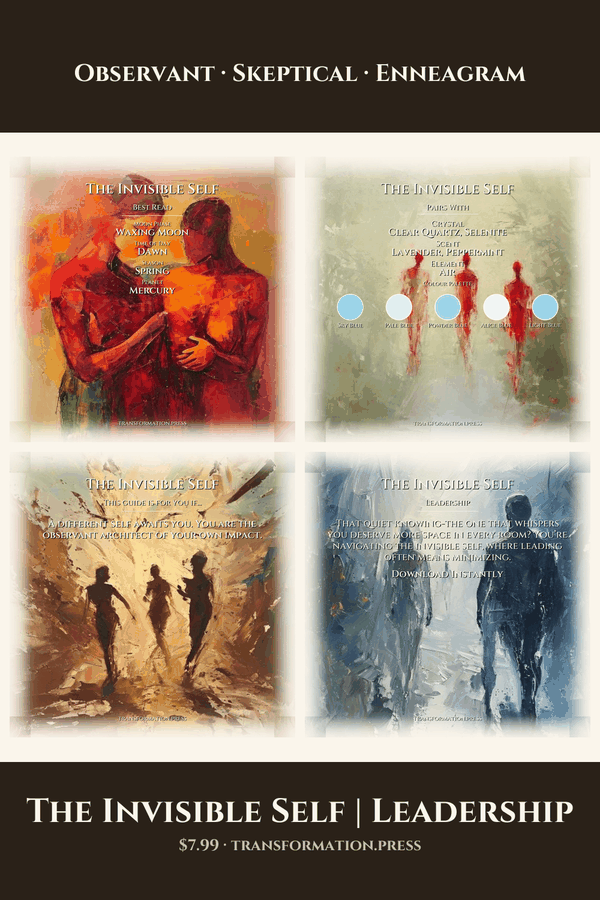
Book cover: A different self awaits you. You are the observant architect of your own impact. Your restraint is not strength; it
You keep telling yourself you’re exhausted, and while the physical toll is real, what if the root cause isn't depleted mitochondria but a constantly breached sense of self? The most reliable pattern we see when people mistake boundary deficits for pure burnout is that their fatigue spikes precisely after they say yes to things that don't serve them. You are over-giving emotional currency in areas where you haven’t established guardrails, and your body is sending signals—loud, persistent ones—that read "stop." Understanding this pattern alone can shift how you view your exhaustion entirely. But if that wasn't enough to keep you hooked, consider exploring The Myth of the Always Available Self, The Emotional Debt Cycle, and The Invisible Agreement You Keep Making With Others.
You currently operate with a sense that your exhaustion is purely biological, accepting fatigue as an immutable fact of your physical state. But what you are missing is the framework for understanding boundary deficit—the critical recognition that so much of this draining feeling stems not from biology alone, but from porous personal limits. Imagine grasping the full picture: seeing precisely where your energy leaks occur because those essential lines defining your capacity have become blurred or nonexistent. This clarity reveals a fundamental shift in perspective, one where reclaiming your boundaries feels less like an imposition and more like a necessary act of self-preservation that restores steady reserves of vitality. Understanding this gap means knowing what true control over your daily energy actually looks like.
To explore practical strategies for strengthening your personal boundaries and managing energy levels, visit the complete guide at transformation.press

Frequently Asked Questions

Is it possible that my 'chronic fatigue' symptoms are actually related to poor boundaries?

Yes, many experts suggest that persistent exhaustion can stem from over-giving or difficulty saying no, which is a boundary issue rather than purely physical illness.

What specific kinds of boundaries might be causing chronic fatigue?

This could include emotional boundaries (taking on others' feelings), time boundaries (overcommitting), or energy boundaries (never allowing yourself downtime).

If it is a boundary issue, what are the first steps I should take to fix it?

Start by identifying one area where you consistently overextend yourself. Practice saying 'no' to small requests before tackling big ones.

How can I tell if my fatigue is due to a medical condition versus boundary issues?

It’s best to see both professionals: first, rule out physical causes with your doctor; second, work with a therapist specializing in boundaries or burnout.

Will learning better boundaries actually 'cure' my fatigue?

While it won't instantly fix everything, establishing healthier limits can significantly reduce the chronic depletion that contributes to persistent exhaustion.