
Trust Your Gut: Know Your True Strengths Better Than Anyone Else

Trust Your Gut: Know Your True Strengths Better Than Anyone Else

Hearing lists of supposed gifts—"You're creative," "You're a natural leader"—only to feel a dull resistance in your chest when you try to reconcile those labels with what actually feels effortless is exhausting. Constantly seeking external validation for your deepest capabilities, relying on others' interpretations during this whole process of intuition development, drains the energy needed for genuine self-discovery journey work. Those external assessments, while well-meaning, feel like descriptions written by someone else about a person you are still figuring out how to describe yourself. The gap between what people see and what you genuinely feel is too wide. Accepting that your gut feeling accuracy regarding your personal strengths assessment often trumps committee consensus requires a specific kind of internal validation, one rooted solely in recognizing your own inner knowing.
Your pattern isn't a glitch in your operating system; it’s simply how your specific celestial blueprint is wired for processing information. Stop viewing that innate tendency toward deep feeling as something to be corrected or overcome when you look at self-assessment vs external evaluation of strengths. Instead, understand this wiring through the lens of intuitive understanding of personal talents within astrology. Your natural aptitude for reading subtle energetic shifts—your gut feeling accuracy—is a core function of your sensitive placements, perhaps related to strong Neptune or Moon energy. This internal validation system is far more reliable than any standardized test because it speaks directly to your inner knowing. Recognizing this inherent pattern allows you to move past seeking external permission and begin trusting gut feeling about abilities as the primary compass for developing internal awareness of skills.
The conventional world insists that some standardized metric or expert opinion holds the definitive answer regarding your personal strengths assessment. They treat inner knowing like a solvable equation, dismissing the subtle signals that guide you toward true capability. But this misses the fundamental truth: self-awareness is not something to be given; it is something to be unearthed from within. The sphere framework illuminates why relying on external evaluation of strengths often fails to capture your most potent assets. It demonstrates how deep intuition development operates independently of any quantifiable test, suggesting that the gut feeling accuracy you possess points toward a deeper truth about natural talents identification. You are finally being seen through the lens that understands that internal validation always supersedes temporary consensus. Trusting gut feeling about abilities is not mere guesswork; it is recognizing your unique blueprint for self-discovery journey.
Ignoring what you genuinely sense about your capabilities means continuing to build a professional identity based on secondhand descriptions. You risk allocating significant energy trying to fit into molds others have drawn for you, leaving you perpetually feeling like you are performing rather than simply being effective. The effort required to maintain an inauthentic facade drains the very energy needed for genuine satisfaction. Conversely, honoring your internal compass allows you to navigate toward work that naturally draws you in. When you trust your own assessment of what feels effortless, you begin making choices where aptitude meets passion. This alignment doesn't just feel good; it builds a sustainable foundation for a career trajectory that requires less constant convincing and more natural momentum.
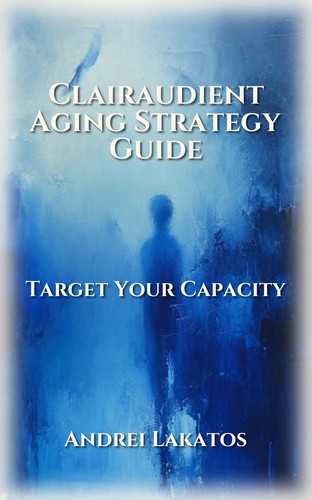
Book cover: You hear what they miss. You are the one with clear hearing. Your inner voice speaks volumes right now. Own your resonance.
You keep reading those competency reports, nodding along to the flattering adjectives about your "natural affinity for synthesis," but here’s what you need to know: the gap between what others perceive as your strength and where you actually feel competent is a chasm that usually points toward an overestimation of external perception. You are far more attuned to the friction points in your own process than any third-party assessment can ever capture. Trusting that internal 'knowing'—that low-grade hum when a task feels effortless versus when it feels like wrestling smoke—is actually a more reliable compass for navigating your true professional north star. However, this self-trust isn't always the whole story. You should also be paying attention to The Asymmetry of Skill Decay, Pattern Recognition in Boredom, and The Resonance Frequency of Failure.
Right now, you have a collection of suggestions about what others think you are good at. You feel capable, yes, but there is a distinct space between that current understanding and knowing precisely where your natural genius lies—the areas where effort feels almost unnecessary. Imagine having an internal compass that points directly to the work that energizes you from within, bypassing years of guesswork or chasing titles based on expectation rather than aptitude. The distance separating you from this pinpoint clarity is substantial; it’s the difference between feeling generally competent and knowing with absolute certainty what makes your contribution uniquely powerful. What you are missing is the internal map that connects who you truly are to the career path designed for effortless fulfillment, a full picture only self-recognition can provide.
To deepen your understanding of your innate strengths and build on this self-knowledge, visit the complete guide at transformation.press

Frequently Asked Questions

Why do I trust my gut feeling over professional evaluations of my skills?

Your intuition draws on years of lived experience and self-awareness that standardized tests or third-party observers cannot fully capture. You know how you feel when you are actually using the skill, which is a deeper metric than observation.

Are there times when external assessments *are* more accurate than my intuition?

External assessments can be highly valuable for identifying blind spots—skills or strengths others see in you that you are unaware of. However, they should complement, not replace, your self-knowledge.

How can I improve my ability to trust my own intuition regarding my strengths?

Start by journaling about times you felt successful or naturally engaged; these moments often point directly to your core aptitudes. Practice metacognition by analyzing *why* certain tasks feel easy to you.

What is the difference between confidence and actual strength, according to this topic?

Confidence is a feeling of belief, while true strength is demonstrated capability under pressure. Your intuition helps distinguish which feelings are backed by consistent performance.

Should I ignore negative feedback if it contradicts my gut feeling about myself?

Never completely ignore external feedback; instead, treat contradictory input as data points to investigate. Ask clarifying questions like, 'Can you give me a specific example of when you saw that?'